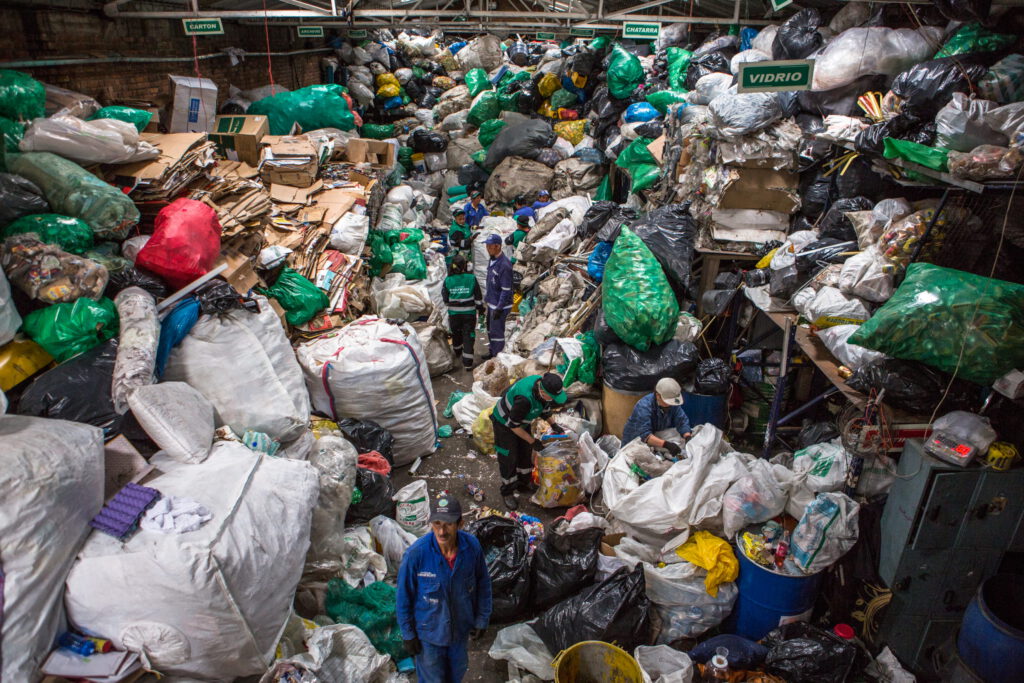

Across the world, governments and private actors are shutting down dumpsites in the name of modernization, climate action, or urban order. But for the millions of waste pickers who have sustained recycling systems for decades, these closures do not feel like transitions. They are evictions. They mean losing the right to work, being pushed out of the city, being excluded from decisions that shape our lives, and being blamed for environmental problems we did not create. What is presented as progress often results in repression: sites close overnight, police arrive before social services, and companies take control of materials without acknowledging the workers who made those materials valuable in the first place.
From Africa to the Asia-Pacific, from the Americas to Europe, our affiliates report the same pattern when their workplaces are closed: no consultation, no guarantees, and no place for waste pickers in the so-called “new systems.” Environmental narratives, technical language, and regulatory frameworks are repeatedly used to justify the exclusion of workers—especially women, migrants, and racialized communities who already face multiple forms of inequality. These are not isolated cases; they represent a global political trend that threatens our livelihoods, our dignity, and the continuity of organized waste picker movements worldwide.
We reject the idea that waste pickers are a problem to be removed. For generations, we have diverted enormous quantities of materials from dumpsites, reduced emissions, and protected ecosystems—long before recycling, reusing, and repairing became part of official environmental agendas. Today, despite vast amounts of valuable materials being wasted or captured by corporations, waste pickers are increasingly denied access to recyclables, reusable materials, and repairable goods. A system that discards workers while protecting profits is neither modern nor sustainable.
No dumpsite closure can be legitimate without the full participation of waste pickers from the outset. We demand recognition as workers who need rights, and a decisive role in the planning, implementation, and monitoring of any waste system reforms. Any restructuring must guarantee secure livelihoods, continued access to materials, and real alternatives for those who choose different pathways. Anything less is forced displacement.
We denounce all forms of criminalization and repression. Sudden closures, violent evictions, and narratives that portray waste pickers as obstacles to environmental progress are incompatible with a just and democratic transition.
We draw a clear line: we will not accept closures that erase our work, deny our access to materials, projects that dispossess us of value, or models that treat poor workers as disposable. Our vision is of cities where waste pickers are recognized as environmental workers, with dignified working conditions, stable incomes, political voice, and shared control over the systems they sustain.
We speak with one global voice: Work with us. Invest in us. Recognize us. Partner with us. A world without waste pickers is a world with more waste—and less justice.