Waste pickers: essential climate workers for a just and zero-waste transition
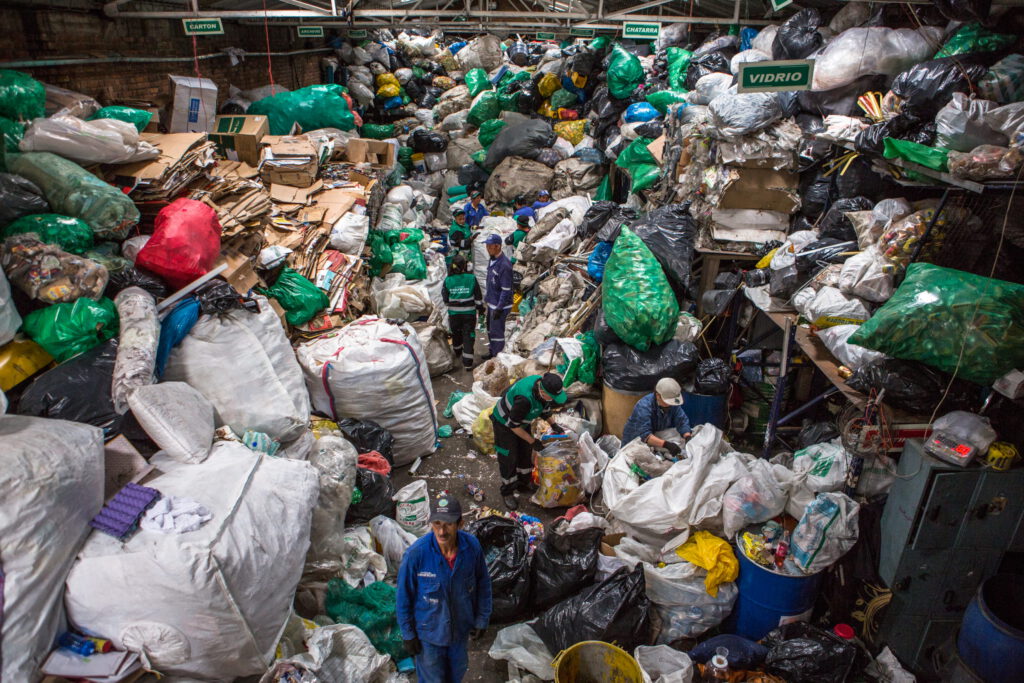
Across the world, millions of waste pickers—mostly workers in the informal economy—collect, sort, and recover materials and compost that the market discards. Our daily work prevents waste from being dumped or burned, reduces greenhouse gas emissions, and keeps cities cleaner and more sustainable.
As waste pickers, we significantly mitigate global greenhouse gas emissions. An analysis by our allied organization, Women in Informal Economy Globalizing & Organizing (WIEGO), together with affiliates of the International Alliance of Waste Pickers, estimates that waste pickers help avoid between 0.17 and 0.39 billion tonnes of CO2 equivalent each year. This estimate accounts for 0.3-0.7 percent of global emissions (59 billion tonnes CO2eq annually) and between 7% and 17% of the 2.3 billion tonnes generated by the waste sector. Each waste picker avoids approximately 44 tonnes of CO2 equivalent per year (interquartile range: 15-82), equivalent to the annual greenhouse gas emissions of 6.5 people (Cook and Cass Talbott, forthcoming). Another estimate by the New Climate Economy suggests that a waste picker’s carbon footprint is negative 4 tons per year.
Waste pickers rank among the world’s most carbon-efficient workers. We utilize our bodily energy, low-emission transport options such as carts, trolleys, and bicycles, alongside community-based systems, to deliver tangible climate results. Our efforts reduce methane emissions from dumpsites, cut carbon and methane emissions from avoided virgin plastic production, and advance the circular economy through recycling, reuse, and composting.
Despite providing this vital environmental service, waste pickers remain largely invisible in public policy and excluded from climate finance. Around the world, we face increasing precarity—from extreme weather events that destroy our workplaces and homes to competition from costly, energy-intensive technologies such as incineration and centralized waste management systems, which are misleadingly promoted as “green solutions.”
Over the years, our organizations have consistently demonstrated that our work in inclusive reuse, recycling, composting, and biomethanization is essential to the development of effective zero-waste policies. Federations, cooperatives, and associations have established local systems for collection, sorting, and education programs, proving that climate mitigation can foster social inclusion and dignity.
On Just Transition Mechanism Discussions in COP 30:
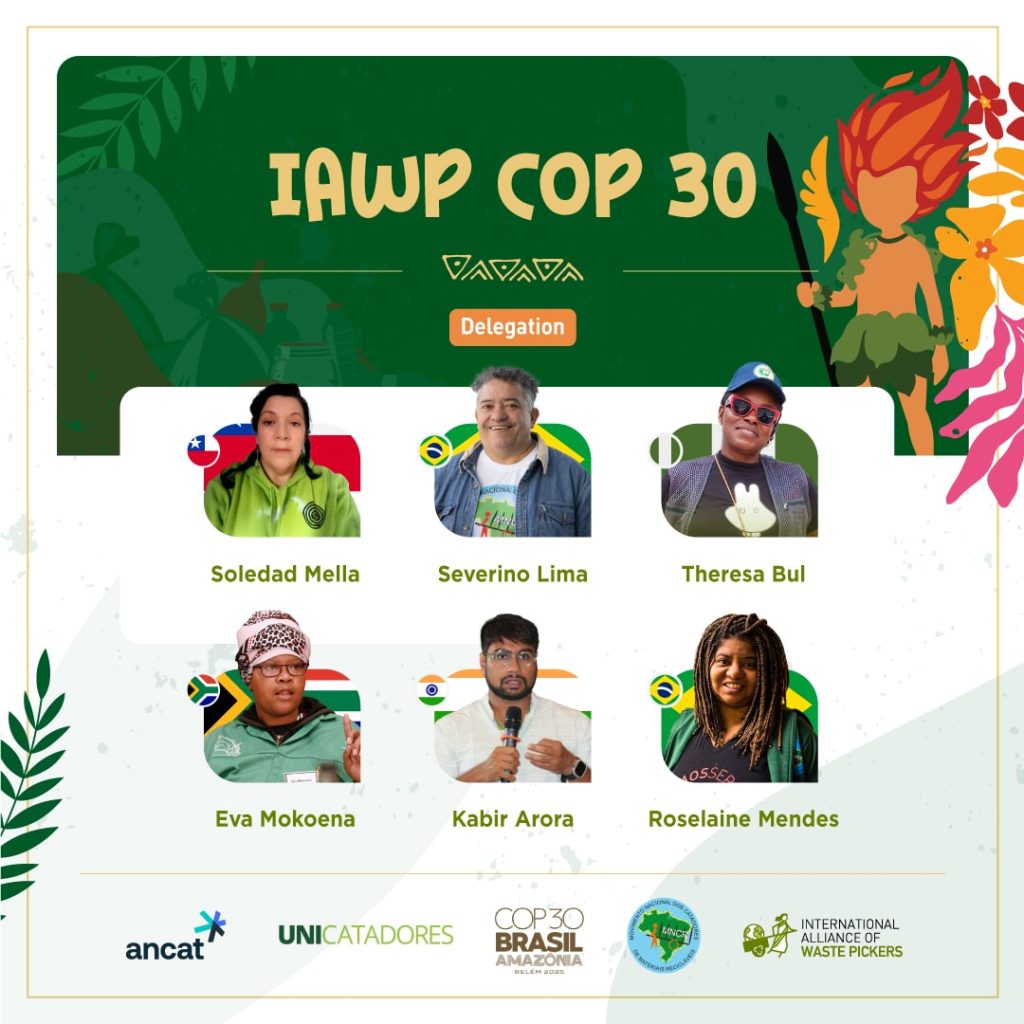
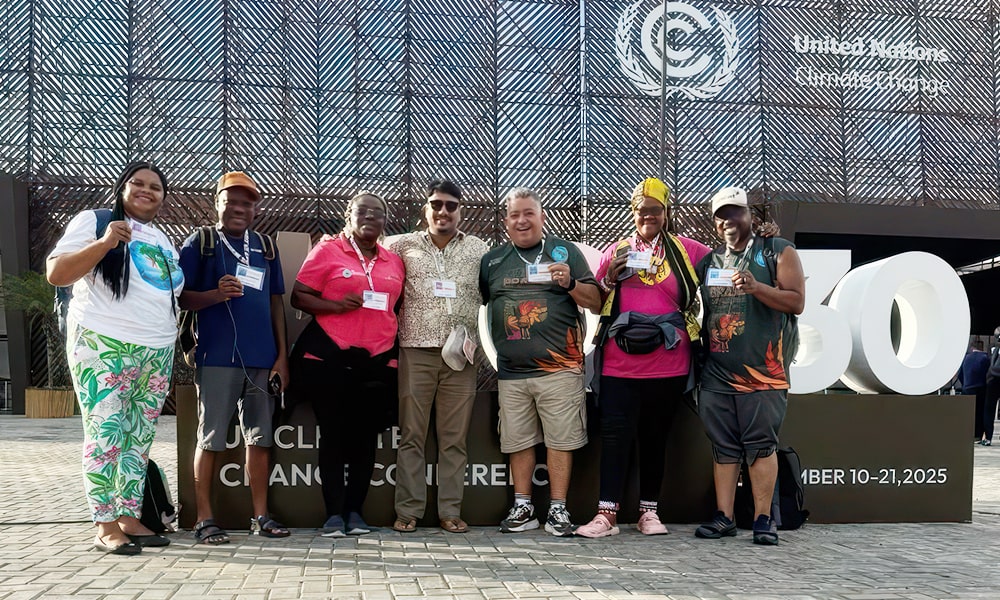
We, the waste pickers, welcome this event as a COP of implementation and action. We appreciate that the Brazilian Presidency has ensured broader participation of waste pickers, allowing us to send the largest delegation ever to a COP. Furthermore, we support the initiative of China + G77 countries, which calls for the establishment of a Just Transition Mechanism.
Discussions about the Just Transition Mechanism must include Indigenous Peoples and workers in the informal economy, particularly waste pickers, home based workers, street vendors, landless rural workers, workers in the mining sector and those who reside in the informal settlements and slums.
Waste Pickers & Just Transition:
We as waste pickers are both vulnerable to the impacts of climate change and essential providers of climate solutions through our work in recycling, reuse, and organic waste management. Similarly, climate funding must reach waste pickers’ organizations, which actively deliver zero-waste solutions while reducing carbon and methane emissions through our daily efforts. Recognizing and financing these community-based climate actors is crucial for achieving genuine, equitable, and people-centered climate action.
A true Just Transition will not emerge from expensive, high-tech innovations that are detached from reality. Instead, it will emerge from organized communities of workers who recycle, reuse, compost, and rebuild solidarity from the ground up.
Lastly, we waste pickers are also a driving force for discussions on Just Transition in the ongoing negotiations of the Plastics Treaty, and Just Transition for Waste Pickers is one central point of convergence between all the member states in those negotiations. By ensuring a Just Transition for Waste Pickers, member states and all stakeholders concerned will ensure alignment between all interconnected legal instruments addressing climate change and plastic pollution.
Waste Pickers Asks from COP 30:
The International Alliance of Waste Pickers calls on governments, international agencies, the private sector, and donors to:
- Integrate waste pickers into national and local climate strategies as key partners in mitigation and adaptation plans, and a just transition mechanism.
- Guarantee access to climate and development funding for waste picker organizations and cooperatives.
- Adopt zero-waste policies inclusive of reuse and recycling, composting, and biomethanization, acknowledging the environmental and social contributions of waste pickers.
- Protect and formalize waste pickers’ rights and livelihoods, ensuring that transitioning to low-carbon economies does not leave us behind.
- Institute social protection measures for waste pickers and other informal economy workers, which support us in navigating extreme weather events such as extreme heat, wildfires, unseasonal heavy rain, and snowfalls.