IAWP
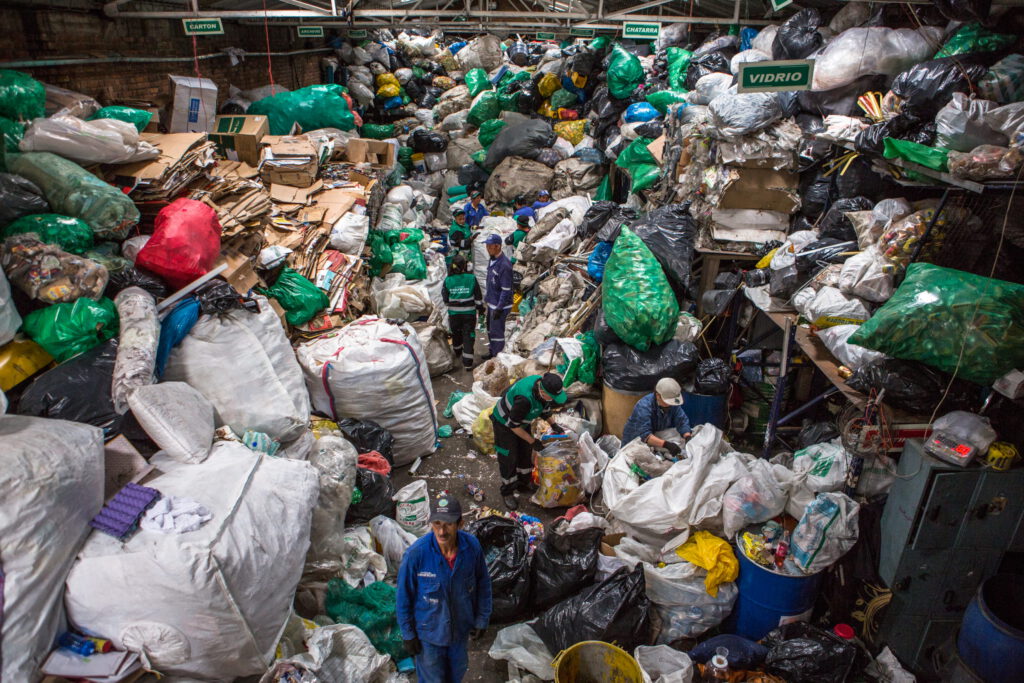
In nearly every country on earth, waste pickers are active in the recovery of materials for reuse and recycling, with great benefit to human and environmental health. Globally, we are responsible for handling 60% of the plastics collected for recycling, diverting materials that would otherwise be burned in uncontrolled fire (Velis, 2022), and filling critical gaps and cost savings across waste management systems. Furthermore, our livelihoods are both dependent on, and victims of the culture of disposability.
Our unpaid and underpaid labor feeds industrial profits and subsidizes the cost of a convenient society. We waste pickers are innovative in our ability to find uses and markets for things, including hard-to-recycle materials like textiles, which we recover for daily use, resale, mending, upcycling, washing, and redistribution, rag and rug-making, and recycling.
Through our work in recycling we contribute substantially to the mitigation of greenhouse gas emissions. Tentative estimates suggest that each waste picker prevents the emission of approximately 44 tonnes of CO2eq each year, with waste pickers overall preventing between 7 and 17 percent of the 2.3 billion tonnes generated by the waste sector (Cook and Cass Talbott, forthcoming).
Our work is essential to our survival, and yet comes at a considerable cost to our health. We are exposed to dangerous chemicals, dust, sharps- even radiation- through our work, with waste management ranking among one of the world’s most dangerous occupations.
As part of the working poor, we are more likely to live in low-income and informal settlements that lack adequate waste management services- compromising our right to a clean and healthy environment as we are forced to burn, bury, and open dump our waste. Meanwhile, a growing share of packaging is low-value, low-recyclability plastics with no incentive for collection (Tearfund 2019). We know very well the sight and smell of burning plastic and the threat of losing our jobs.
In the face of these injustices, the International Alliance of Waste Pickers stands for the phasing out of single-use plastics and fast fashion. But for such a transition to be just, we must prioritize in the planning and implementation of the shift back towards reuse- and repair-based economies, including creating alternative pathways to work for workers engaged in the production, reuse, and recycling of single-use plastics and fast fashion.
For this to be possible, we need adequate financial mechanisms that prioritize direct and predictable access through simplified application and approval processes (Tearfund and IAWP 2025), and supportive partnerships.
Meanwhile, the phase-out of chemicals of concern, especially those associated with plastic waste and recycling (Brosché et al, 2025), is essential and urgent. In a rapidly changing, and fast digitalizing, world, we need recognition in public policy, but also cannot wait for it to protect us. The right and opportunity to organize and bargain collectively is therefore critical in order for us to gain protections to our health and safety.
Brosché, s., et al. 2025. Plastics Poison the Workplace II: Chemical exposures to plastic waste and recycling workers in Kenya and Thailand. IPEN, Arnika, EARTH, and CEJAD. https://ipen.org/sites/default/files/documents/ipen-wristbands_report-kenya_thailand-final-3_small.pdf
Cook and Cass Talbott. Forthcoming. Mitigating from the Margins: Waste Picker Impact on Greenhouse Gas Emissions: A quantitative appraisal and evaluation of the Waste Picker Greenhouse Gas Calculator (WPGGC). WIEGO and the International Alliance of Waste Pickers.
Pew and SYSTEMIQ. 2022.Breaking the Plastic Wave: A Comprehensive Assessment of Pathways Towards Stopping Ocean Plastic Pollution. https://www.systemiq.earth/wp-content/uploads/2020/07/ BreakingThePlasticWave_MainReport.pdf
Tearfund. 2019. No Time to Waste. https://learn.tearfund.org/-/media/learn/resources/reports/2019-tearfund-consortium-no-time-to-waste-en.pdf
Tearfund and IAWP. 2025. The plastics treaty finance mechanism: Lessons from other Multilateral Environmental Agreements regarding access for waste pickers and other grassroots groups
Velis, C.A., 2022. Plastic pollution global treaty to cover waste pickers and open burning? Waste Manage. Res. 40(1), 1-2.