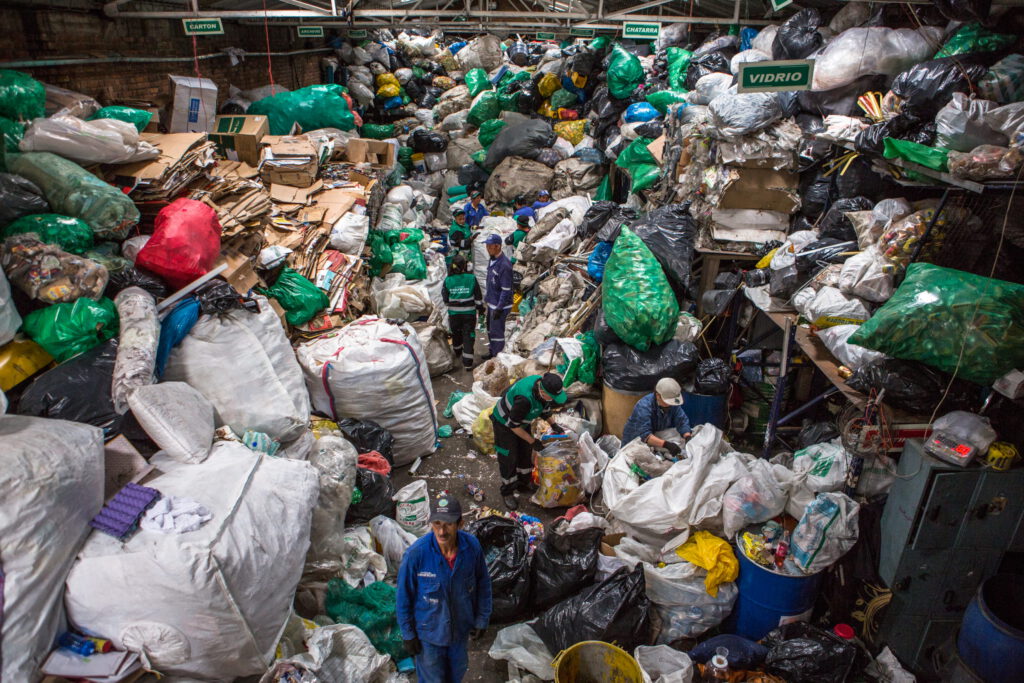
Waste pickers are already delivering measurable climate benefits. We reduce methane by diverting organics from landfills, cut CO₂ emissions by recovering plastics and recyclables, and enable low-carbon, circular economies in cities worldwide. Despite being frontline climate actors, waste picker organizations remain excluded mainly from direct access to climate finance. This exclusion is not based on performance—community-led climate action consistently delivers solutions faster, at lower cost, and with deeper local knowledge than top-down interventions. The barrier is structural: climate finance still moves through complex intermediaries, rigid and expensive accreditation and verification systems, and incremental-cost methodologies that grassroots groups cannot realistically meet. That said, the discussions on climate finance are moving forward to ensure direct access.
Recent reforms under the United Nations Framework Convention on Climate Change (UNFCC) and other environmental agreements, however, open new doors that waste pickers can and should use. Mechanisms such as Enhanced Direct Access under the Adaptation Fund and the Green Climate Fund enable national entities to establish small-grant windows for grassroots groups. The new Global Locally-Led Adaptation Aggregator will provide microgrants directly to community organizations, eliminating the need for national governments. New funds—such as the Fund for Responding to Loss and Damage—also commit to simplified procedures and “small grant funding for communities.” If adapted for mitigation and circular economy work, these models could finally provide predictable and accessible climate finance for waste picker cooperatives and movements, especially where they have already demonstrated methane reduction, avoided emissions, urban resilience, and adaptation.
Persistent barriers and what must change
Yet we still face severe obstacles. Many climate funds rely on large international agencies and complex approval systems that often exclude informal-economy worker organizations. Except for funding mobilized by the Global Methane Hub to support methane reduction through organic waste management by waste pickers, we have not received a single cent of climate finance. Without dedicated funding windows, simplified applications, full-cost financing, and explicit recognition of waste pickers as climate actors, these barriers will continue. We must push for climate finance models that truly work for grassroots groups—small grants, direct access, and decision-making that is devolved to the local level. Waste pickers must be recognized as climate solution providers, not invisible labour at the edges of the system.
Carbon credits and market-based mechanisms
Market-based instruments, such as blended finance or carbon credits, often create risks of debt, exploitation, and the diversion of value away from waste pickers. We have not benefited from these schemes. In some cases, technologies such as incineration— which destroy waste picker livelihoods—have even been considered eligible for carbon credits. We oppose these interventions. Incineration is a false solution: it destroys livelihoods, releases toxins, and is one of the most inefficient and harmful ways to manage waste or generate energy. As waste pickers, we do not support market-based financing models, such as carbon credits. We prefer stable, direct, easy-to-access funding that recognizes our proven role in reducing emissions and strengthens the livelihoods that already contribute to climate mitigation and adaptation.
Just transition and climate finance
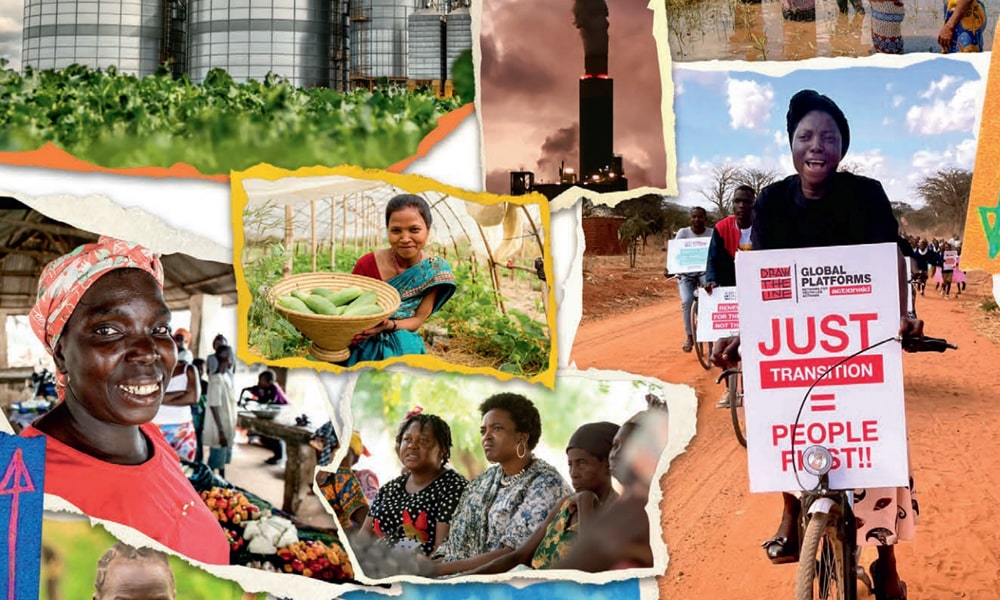
The ongoing discussions on a Just Transition mechanism proposed by China and the G77. We welcome this debate and urge Parties to use existing resources to finance a just transition from carbon-intensive systems toward low-carbon, circular, and zero-waste economies.
According to a recent ActionAid report, less than 2.8% of climate aid currently supports a just transition to a low-carbon economy. In other words, only $ 1 out of every $ 35 is spent on projects aligned with just transition principles. Our comrades in the International Trade Union Confederation remind us that in many places, climate finance serves the interests of investors rather than the people facing the climate emergency.
In their response to the ActionAid report, the Climate Investment Fund and the Green Climate Fund emphasised that their decision-making bodies include equal representation from donor and recipient countries. But they said nothing about the representation of grassroots communities—those who must lead the just transition or whose livelihoods have already been destroyed by climate impacts. Even in a member-state-driven process, it is essential that affected communities participate meaningfully in the process. Those who will undergo the transition, as well as those already experiencing climate disasters, must have a voice in shaping the solutions.